

Drip Irrigation
Inlaid Patch Drip Irrigation Tape
Model: CF-01 (flat emitter patch inside)
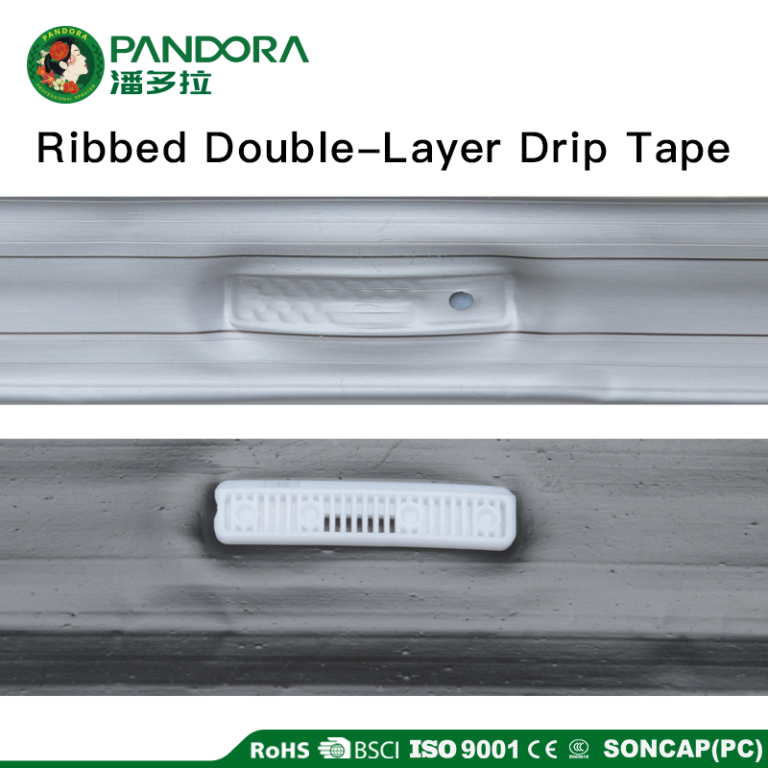
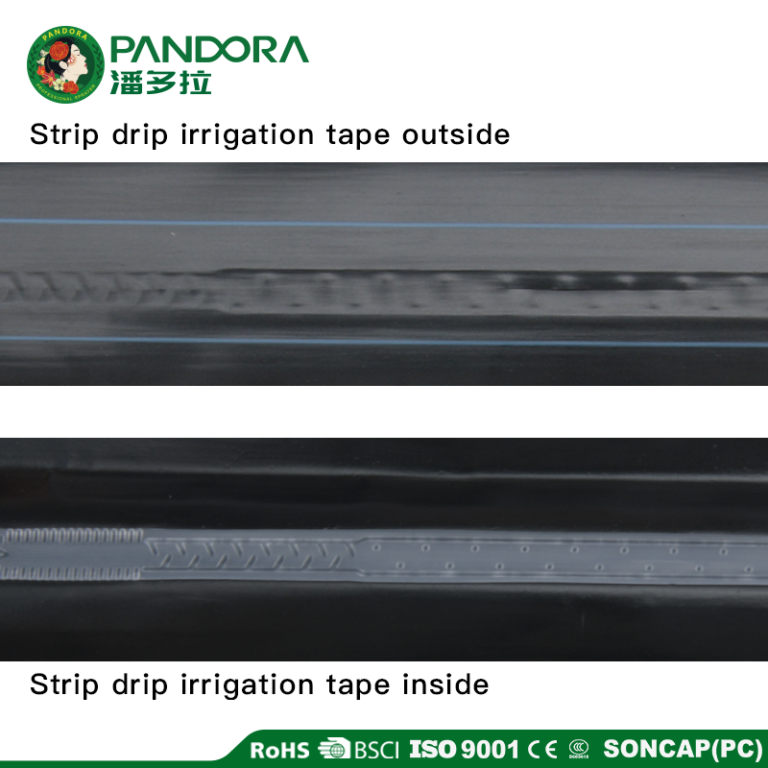
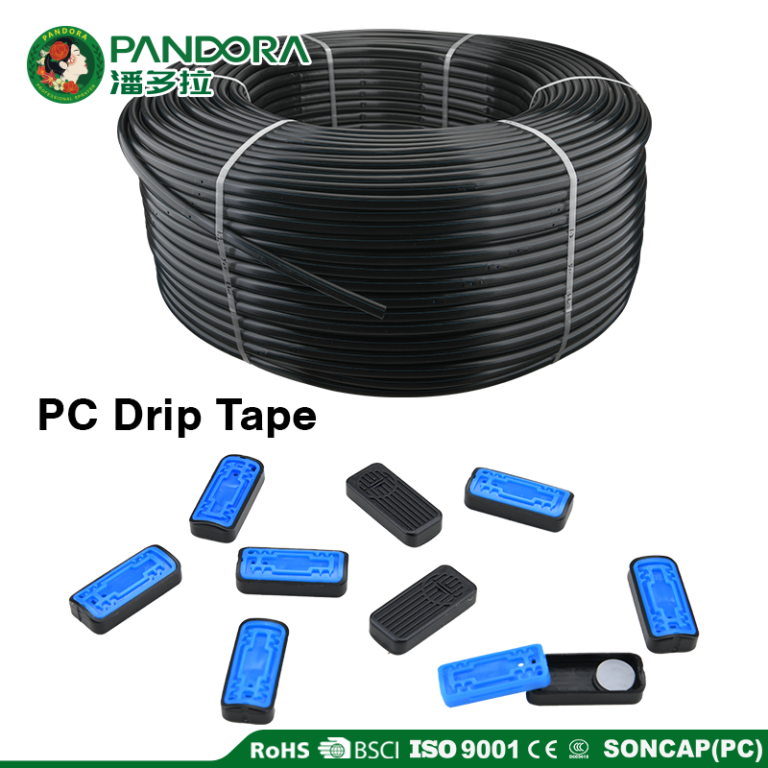
The emitter on this tape is a flat patch bonded inside the tube wall as the tube is extruded. Its face is a grid-type filter window and its labyrinth passage sits behind it, so clogging resistance is built into the emitter instead of delegated to the filter station alone — and the tape stays flat and light for handling.
- Diameter
- 16 mm / 22 mm
- Wall thickness
- 0.15 – 0.6 mm (6 – 24 mil)
- Emitter spacing
- 10 – 60 cm (5 cm / 10 cm close spacing on request)
- Roll length
- 100 – 3000 m per roll (varies by wall and spacing)
- Nominal flow rate
- 1.0 – 4.0 L/h per emitter
- Emitter type
- Flat emitter patch bonded inside the tube wall; grid-type filter window
How the emitter gets inside the tube
On an inline emitter drip tape, the emitter is a small flat patch bonded to the inside of the tube wall as the tube is extruded. The patch is a separate moulded part: its face is a grid-type filter window, and the labyrinth passage is formed on the patch itself. The tube wall carries the water and the pressure; the patch meters it out.
Patch colour is specified rather than fixed, and it is worth using: assign one colour per flow model and the models can be told apart on the reel and after laying, without measuring spacing in the field.
The emitter brings its own defenses: a filter window at the inlet, and a wide labyrinth passage behind it. Water is screened before it reaches the flow path, and the passage itself is long enough to keep particles moving instead of settling.
Clogging resistance on this tape is built into the emitter, not added at the filter station: the filter window screens the water first, then the wide labyrinth passage dissipates pressure step by step. Uniformity is backed by quantified CV — flow stays even from the head of the line to the end.
Extruding with the emitter already inside also settles a logistics question: the tape is light, packs into flat rolls and loads efficiently — a real container-cost line item for importers.
Maximum run length
The catalogue publishes maximum laying lengths at 10 percent flow variation, by emitter spacing and flow rate:
| Flow rate | 10 cm | 15 cm | 20 cm | 25 cm | 30 cm | 40 cm | 50 cm |
|---|---|---|---|---|---|---|---|
| 1.0 L/h | 60 | 81 | 88 | — | — | — | — |
| 1.38 L/h | 52 | 88 | 83 | — | — | — | — |
| 2.0 L/h | 65 | 65 | 88 | — | — | — | — |
| 2.5 L/h | 105 | 87 | — | — | — | — | — |
| 3.0 L/h | 94 | 72 | 67 | 87 | 81 | 84 | — |
Run length does not hold flow constant at every emitter. Where the ground slopes or output must stay even end to end, that is a job for full pressure compensation — see Pressure Compensating Drip Tape.
Emitter models and pressure–flow curves
The emitter comes in four nominal models — 1.0, 1.38, 2.0 and 3.0 L/h — each with its own pressure–flow curve in the catalogue. Request the curve sheet with your quotation and match the model to your available inlet pressure before fixing spacing.
Wall, spacing and roll combinations
The pairing below is identical for the 16 mm and 22 mm series — the diameter changes the first column of your order, not the spacing, roll length or flow pairing:
| Wall (mm) | Wall (mil) | Emitter spacing | Roll length | Flow rate |
|---|---|---|---|---|
| 0.15 | — | 10 cm | 100 m | 1.0 L/h |
| 0.16 | 6 | 15 cm | 200 m | 1.38 L/h |
| 0.18 | 7 | 20 cm | 500 m | 2.0 L/h |
| 0.2 | 8 | 25 cm | 1000 m | 2.5 L/h |
| 0.25 | — ⚠ | 30 cm | 1500 m | 3.0 L/h |
| 0.3 | — ⚠ | 40 cm | 2000 m | 4.0 L/h |
| 0.35 | — | 50 cm | 2500 m | — |
| 0.4 | — | 60 cm | 3000 m | — |
| 0.5 | — | — | — | — |
| 0.6 | — | — | — | — |
Mil brackets are printed in the catalogue for the 6, 7 and 8 mil gauges; unprinted gauges are converted at 25.4 micron per mil (⚠ verify against the printed catalogue). Combinations shown with a dash are completed from the printed catalogue before quotation, not guessed.
How to specify your order
The catalogue's ordering code combines five choices: emitter type (CF-01, flat emitter patch inside), nominal diameter (16 or 22 mm), emitter spacing, wall thickness and flow rate. Send the five values and the quotation comes back line-itemised — no ambiguity about which gauge or spacing was priced.
Three checks before you order
- Bench flow at the rated value. One-minute volume per emitter on a sample from the actual batch, read against the rated value of the model you are buying.
- Emitter bond check. Cut a sample open: the patch should sit flat and fully bonded to the wall, the filter grid intact, and no gap at the patch edges — the patch-to-wall bond is this construction's specific risk, so check it specifically.
- Spacing pitch count. Count emitters over a measured length of roll and compare against the spacing on your order.
Send us your target specification and we will confirm roll lengths, loading quantities and lead time.
Built for Real Work
Applications
Agriculture
Vegetable Farming
Orchard
Greenhouse
Tea Plantation
Garden Maintenance
Landscape Care
Pest & Weed Control
OEM & Customization
Custom Manufacturing
Looking for OEM/ODM Customization Services?
Empower your own brand with Pandora's flexible OEM solutions. From custom machine colors and logo printing to retail-ready packaging and specific accessory configurations (pumps, nozzles, batteries), we provide factory-direct support to make your products stand out in the local market.
Explore Custom Solutions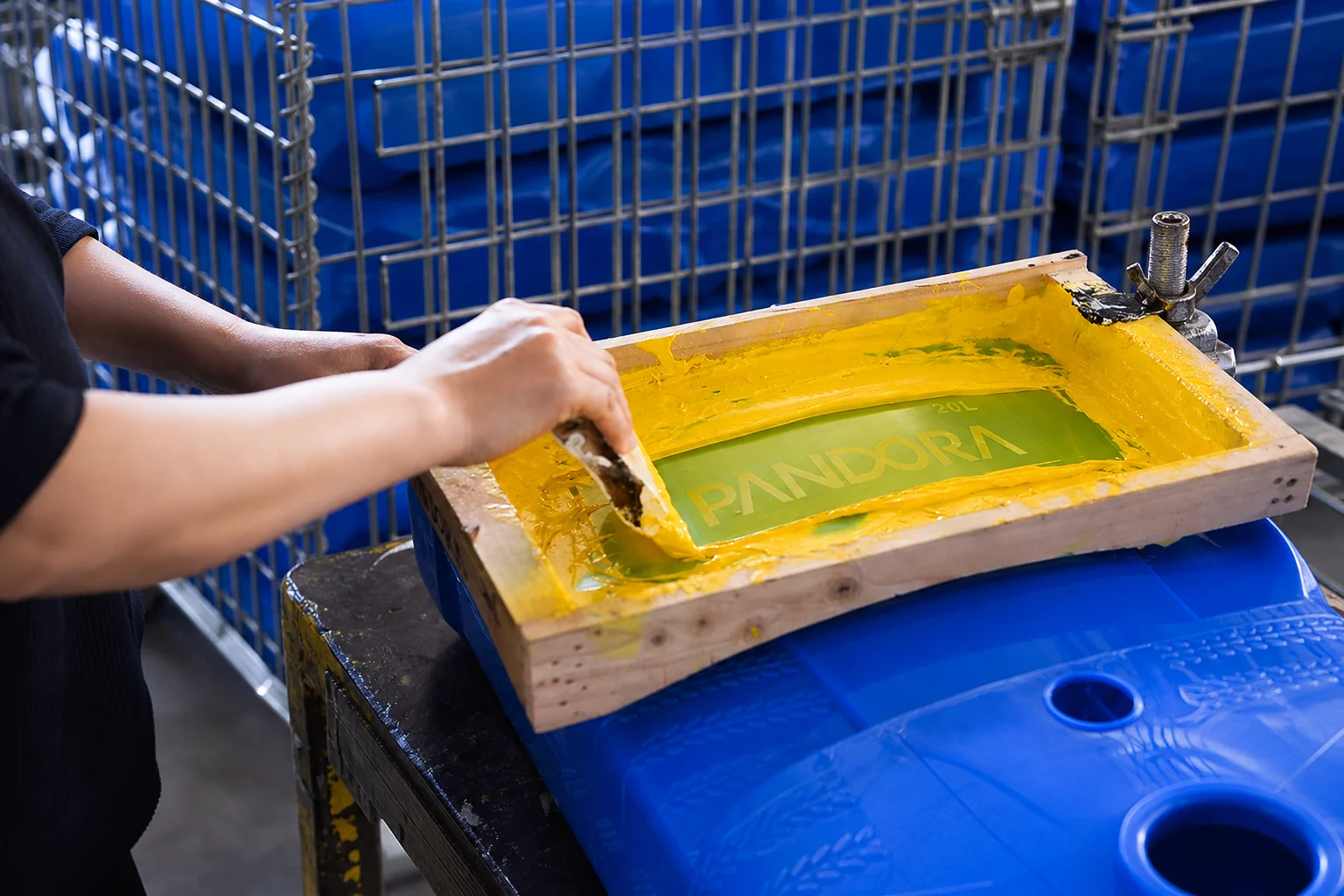
Manufacturing Partner
Why Choose Pandora

Professional sprayer manufacturer with years of OEM experience

Stable production capacity for large-volume orders

Strict quality inspection throughout production
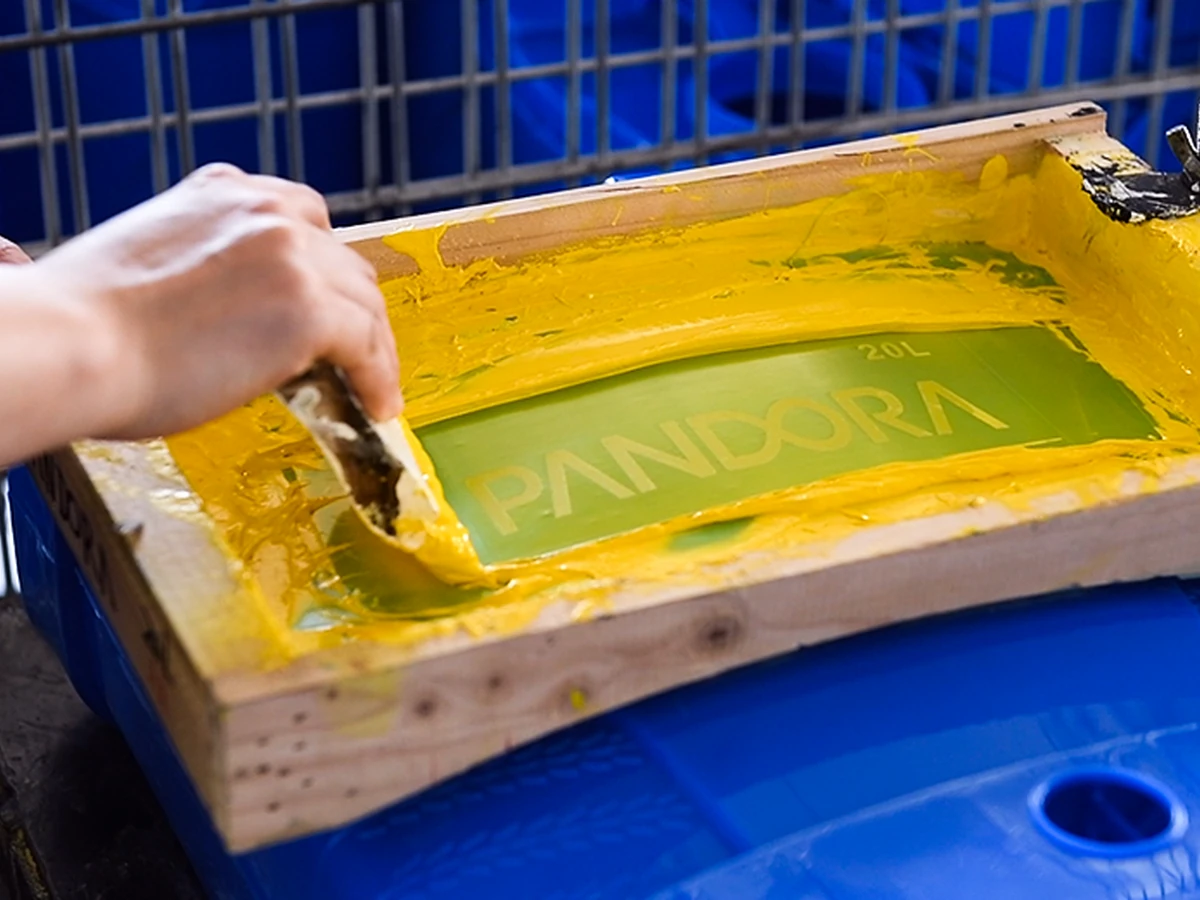
Flexible product customization

Reliable delivery and export support

Complete spare parts supply

Dedicated technical and sales support
FAQ
What is inline emitter drip tape?
It is a drip tape whose emitter is a small flat patch bonded to the inside of the tube wall during extrusion. The patch is a separate moulded part with a grid-type filter window on its face and the labyrinth passage formed on the patch itself, so filtration and pressure dissipation happen inside the emitter — and the tape stays flat and light.
Can emitter spacing be customized?
Yes — spacing is chosen freely and set by the bonding pitch at production. Standard spacings cover the common range, and close spacing is available on request for dense crops; state the spacing in your order and the line is set to it. Emitter patch colour is equally open to specification — a common practice is one colour per flow model, so models are identifiable on the reel and in the field.
What is the minimum order quantity, and can we test a sample roll first?
Sample rolls are available before container commitment — run a bench flow test, cut a sample open to check the emitter bond and filter grid, and count the spacing pitch against your order. Container orders support both 16 mm and 22 mm series with mixed spacings and gauges. Contact us with your target specification for roll lengths and loading quantities.
Related Products

Direct Factory Support
Ready to Partner with Us?
Share your purchasing target or custom needs. Our dedicated technical team will prepare complete product matching and competitive factory quotation support for your project.
- Product Matching
- OEM/ODM Support
- Export Coordination